
A FEW NOTES:
- When the word “City” is capitalized, it refers to the incorporated City of West Hollywood.
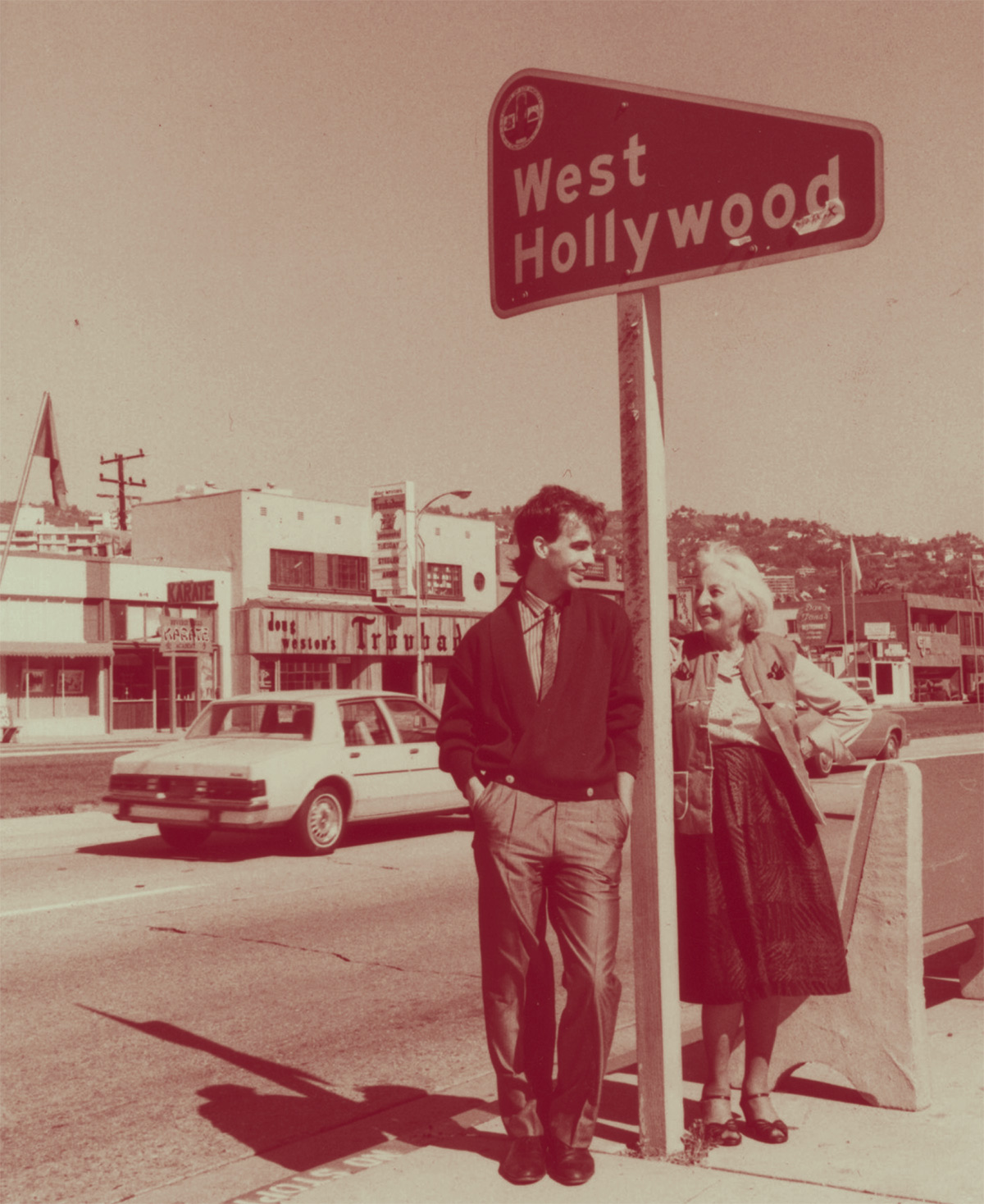
- When Cityhood is capitalized, it refers specifically to West Hollywood Cityhood, including the initial years after the 1984 campaign, as the first City Council and activists laid the City’s foundation.
- The title of the book, WeHo Stories, is a nod to West Hollywood’s beloved nickname—WeHo—which has become known the world over.
WeHo Stories is a digital archive and a coffee table book that documents the inspiring movement that led to the incorporation of West Hollywood and helped shape the city during its first years after incorporation. This project covers what let up to Cityhood, and the people and events that shaped the City in its early years. In addition to the introduction, oral histories, accompanying portraits, and timeline in the book, this website contains memorabilia that was saved from that time, plus a short multimedia piece that was created in honor of West Hollywood’s 40th anniversary in 2024.
The WeHo Stories book and this website were made possible by the perseverance of Supervisor Horvath, and the generous support of the City of West Hollywood, the LA County Library, the Santa Monica College Public Policy Institute, Social and Environmental Entrepreneurs, and countless individual donors and volunteers who believe that West Hollywood’s remarkable story must live on.
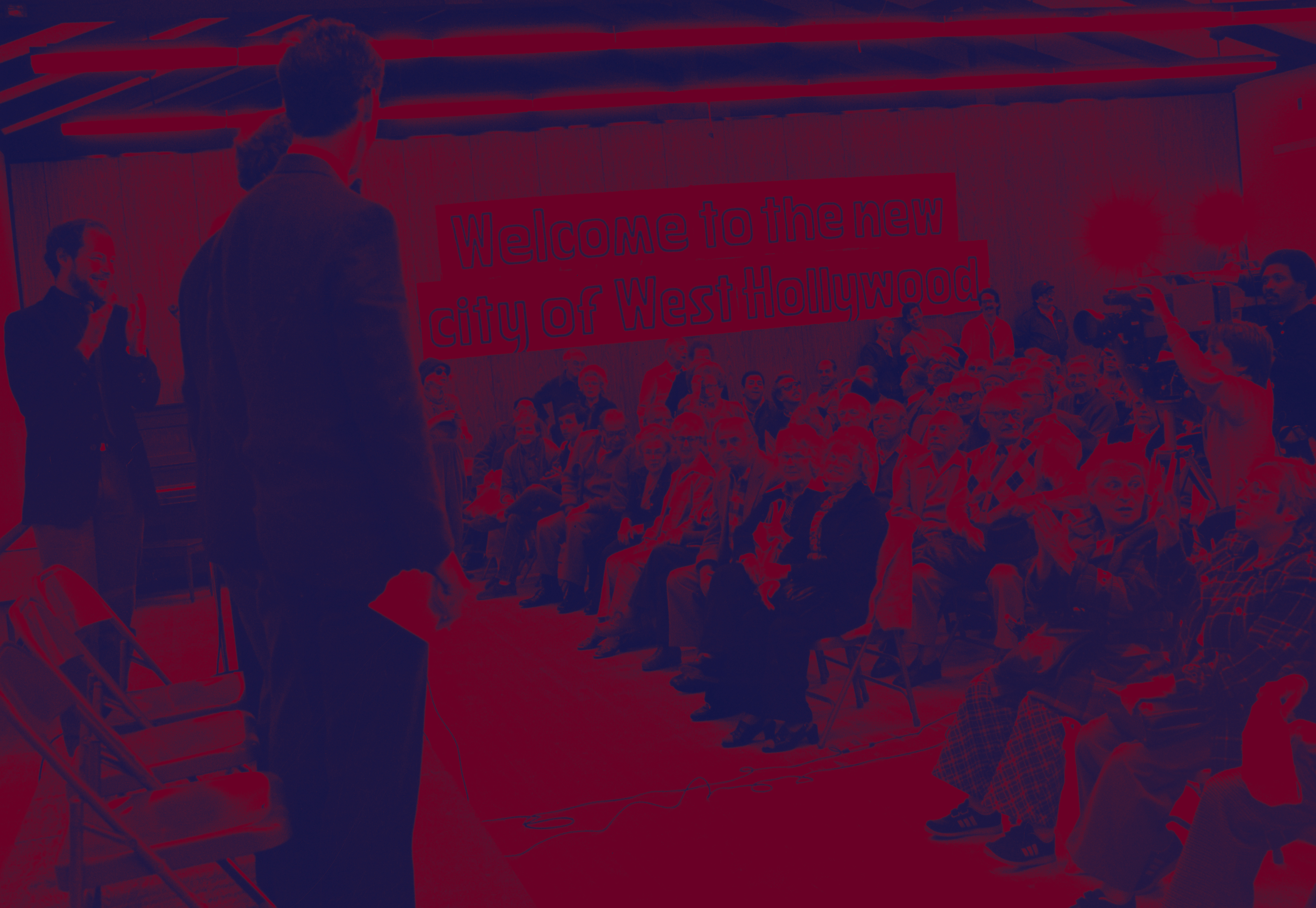
Election night, November 6, 1984. As American President Ronald Reagan swept to re-election, signaling the nation’s rightward shift, something very different unfolded in an unincorporated 1.9 square mile patch of Los Angeles County called West Hollywood. An extraordinary coalition of renters, seniors, homeowners, and LGBTQ+ activists came together to make history, overwhelmingly voting for Cityhood and electing a remarkably progressive City Council.
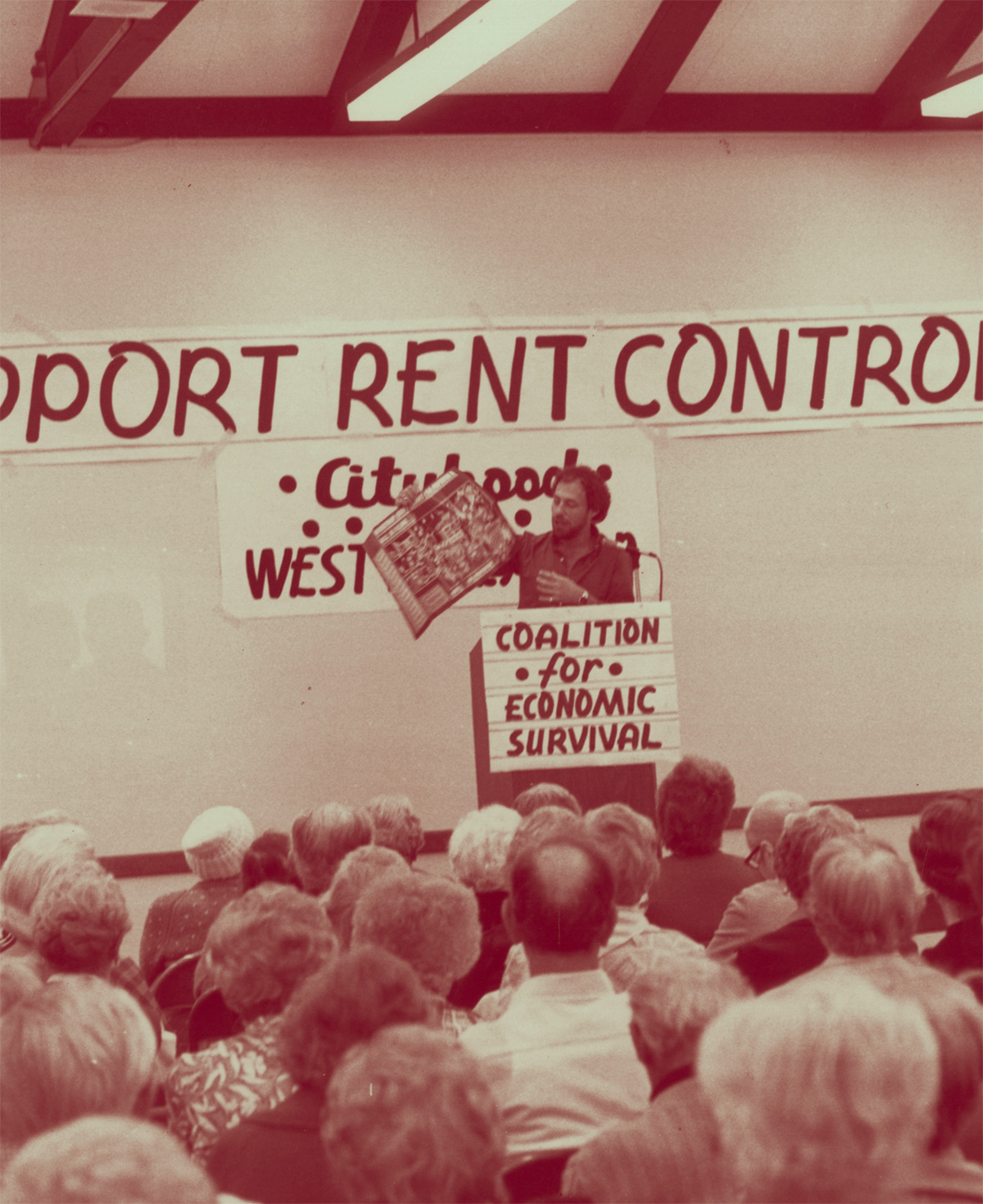
Three of the five councilmembers were openly LGBTQ+, and four of the five councilmembers were endorsed by the Coalition for Economic Survival (CES)—the renters’ rights/social justice organization that spearheaded the Cityhood campaign. They all believed in creating a city like no other.
From the very first City Council meeting on November 29, 1984, the wheels were set in motion for West Hollywood to become an incubator for intersectional and trailblazing policies that would ultimately spark change far beyond its borders. Raising issues such as domestic partnership, strong rent control, and robust funding for social services from day one, West Hollywood’s story is both unique and emblematic: it created a model for local, grassroots democracy in an era when powerful special interests dominated Southern California politics—and the AIDS crisis cast a dark cloud over the young City.
As the first city to incorporate in Los Angeles County in twenty years, the stakes for West Hollywood were high. With its openly lesbian mayor, LGBTQ+ City Council majority, councilmembers ranging from ages twenty-two to seventy-three years old who ran on a platform of seemingly radical ideas for the times, the international media quickly turned their attention to West Hollywood. Local press questioned whether a city run by the maverick, neophyte City Council could succeed.
Though the new city was quickly dubbed the Gay Camelot, reflecting its thirty-percent LGBTQ+ population and the council majority, the motivation for Cityhood was not to create a gay city—that was a side effect. Renters, who constituted eighty-five percent of the population, were the driving force for Cityhood. Their motivation: to get out from under the heavy hand of the pro-landlord Los Angeles County Board of Supervisors, which was on the verge of voting to abolish rent control. For their allies who were homeowners, Cityhood represented the best way for them to exert control over neighborhoods that were becoming overwhelmed by unchecked growth.
Over the decades, much has been written about the City of West Hollywood, yet the first-person accounts of the activists who helped shape this remarkable city have never been documented in one place. As the activists aged, the urgency to preserve their stories grew ever more pressing. It is precisely for this reason that in 2018, Los Angeles County Supervisor Lindsey P. Horvath, then a West Hollywood councilmember, had the vision for WeHo Stories.
Supervisor Horvath tasked Barbara Grover, an award-winning photographer and documentarian, to preserve the heartfelt, funny, and poignant stories of the remarkable individuals who helped to make West Hollywood a city. As a consultant on the Cityhood campaign and Council Deputy to Helen Albert for the first few years after the City’s incorporation, Grover’s own participation in West Hollywood’s history helped bring to life a kaleidoscope of perspectives and experiences. The twenty-eight diverse individuals featured in WeHo Stories through portraits and first-person accounts, edited from Grover’s extensive conversations with each subject, gives voice to these activists as they candidly recall their roles in—and reflect on—a critical period in West Hollywood’s history.
By the time this project got underway, many of the inspiring people involved in the Cityhood movement had already passed away—people like Ron Stone, known as the Father of Cityhood, CES member Helen Albert, a retired teacher and human rights activist who served on the first City Council, and Joyce Hundal and Bud Siegel, homeowner activists who were instrumental in making Cityhood a reality. They are remembered throughout the book by those who knew and worked alongside them.
WeHo Stories offers something more intimate than any official record. It illuminates how, from its founding to the present day, West Hollywood has shone as a beacon of diversity, equity, and sustainability. And they remind us that, while memories may shift over time, the power of people to imagine and build a more just community endures.
WeHo Stories is a digital archive and a coffee table book that documents the inspiring movement that led to the incorporation of West Hollywood and helped shape the city during its first years after incorporation. This project covers what let up to Cityhood, and the people and events that shaped the City in its early years. In addition to the introduction, oral histories, accompanying portraits, and timeline in the book, this website contains memorabilia that was saved from that time, plus a short multimedia piece that was created in honor of West Hollywood’s 40th anniversary in 2024.
The WeHo Stories book and this website were made possible by the perseverance of Supervisor Horvath, and the generous support of the LA County Library, the Santa Monica College Public Policy Institute, Social and Environmental Entrepreneurs, and countless individual donors and volunteers who believe that West Hollywood’s remarkable story must live on.
Election night, November 6, 1984. As American President Ronald Reagan swept to re-election, signaling the nation’s rightward shift, something very different unfolded in an unincorporated 1.9 square mile patch of Los Angeles County called West Hollywood. An extraordinary coalition of renters, seniors, homeowners, and LGBTQ+ activists came together to make history, overwhelmingly voting for Cityhood and electing a remarkably progressive City Council.
Three of the five councilmembers were openly LGBTQ+, and four of the five councilmembers were endorsed by the Coalition for Economic Survival (CES)—the renters’ rights/social justice organization that spearheaded the Cityhood campaign. They all believed in creating a city like no other.
From the very first City Council meeting on November 29, 1984, the wheels were set in motion for West Hollywood to become an incubator for intersectional and trailblazing policies that would ultimately spark change far beyond its borders. Raising issues such as domestic partnership, strong rent control, and robust funding for social services from day one, West Hollywood’s story is both unique and emblematic: it created a model for local, grassroots democracy in an era when powerful special interests dominated Southern California politics—and the AIDS crisis cast a dark cloud over the young City.
As the first city to incorporate in Los Angeles County in twenty years, the stakes for West Hollywood were high. With its openly lesbian mayor, LGBTQ+ City Council majority, councilmembers ranging from ages twenty-two to seventy-three years old who ran on a platform of seemingly radical ideas for the times, the international media quickly turned their attention to West Hollywood. Local press questioned whether a city run by the maverick, neophyte City Council could succeed.
Though the new city was quickly dubbed the Gay Camelot, reflecting its thirty-percent LGBTQ+ population and the council majority, the motivation for Cityhood was not to create a gay city—that was a side effect. Renters, who constituted eighty-five percent of the population, were the driving force for Cityhood. Their motivation: to get out from under the heavy hand of the pro-landlord Los Angeles County Board of Supervisors, which was on the verge of voting to abolish rent control. For their allies who were homeowners, Cityhood represented the best way for them to exert control over neighborhoods that were becoming overwhelmed by unchecked growth.
Over the decades, much has been written about the City of West Hollywood, yet the first-person accounts of the activists who helped shape this remarkable city have never been documented in one place. As the activists aged, the urgency to preserve their stories grew ever more pressing. It is precisely for this reason that in 2018, Los Angeles County Supervisor Lindsey P. Horvath, then a West Hollywood councilmember, had the vision for WeHo Stories.
Supervisor Horvath tasked Barbara Grover, an award-winning photographer and documentarian, to preserve the heartfelt, funny, and poignant stories of the remarkable individuals who helped to make West Hollywood a city. As a consultant on the Cityhood campaign and Council Deputy to Helen Albert for the first few years after the City’s incorporation, Grover’s own participation in West Hollywood’s history helped bring to life a kaleidoscope of perspectives and experiences. The twenty-eight diverse individuals featured in WeHo Stories through portraits and first-person accounts, edited from Grover’s extensive conversations with each subject, gives voice to these activists as they candidly recall their roles in—and reflect on—a critical period in West Hollywood’s history.
By the time this project got underway, many of the inspiring people involved in the Cityhood movement had already passed away—people like Ron Stone, known as the Father of Cityhood, CES member Helen Albert, a retired teacher and human rights activist who served on the first City Council, and Joyce Hundal and Bud Siegel, homeowner activists who were instrumental in making Cityhood a reality. They are remembered throughout the book by those who knew and worked alongside them.
WeHo Stories offers something more intimate than any official record. It illuminates how, from its founding to the present day, West Hollywood has shone as a beacon of diversity, equity, and sustainability. And they remind us that, while memories may shift over time, the power of people to imagine and build a more just community endures.
A FEW NOTES:
- When the word “City” is capitalized, it refers to the incorporated City of West Hollywood.
- When Cityhood is capitalized, it refers specifically to West Hollywood Cityhood, including the initial years after the 1984 campaign, as the first City Council and activists laid the City’s foundation.
- The title of the book, WeHo Stories, is a nod to West Hollywood’s beloved nickname— WeHo—which has become known the world over.